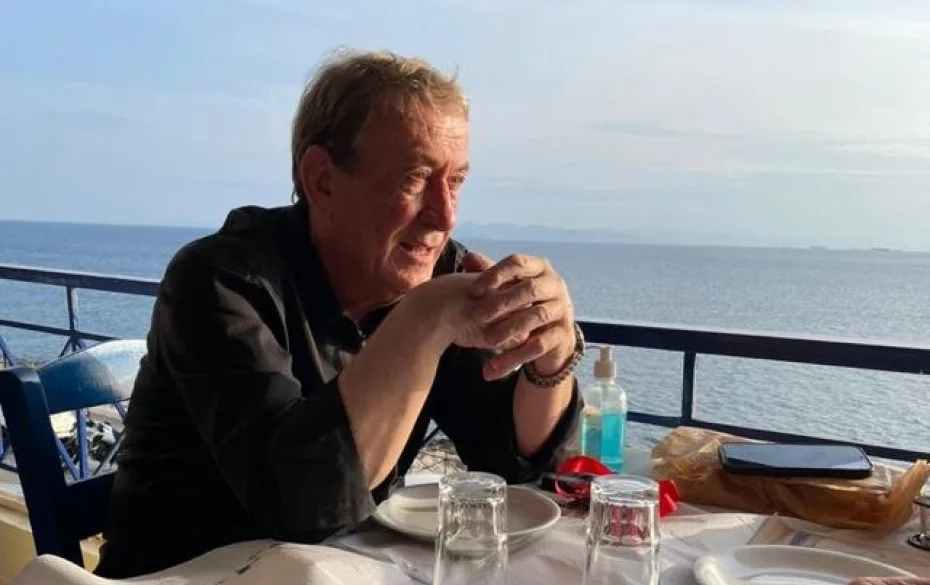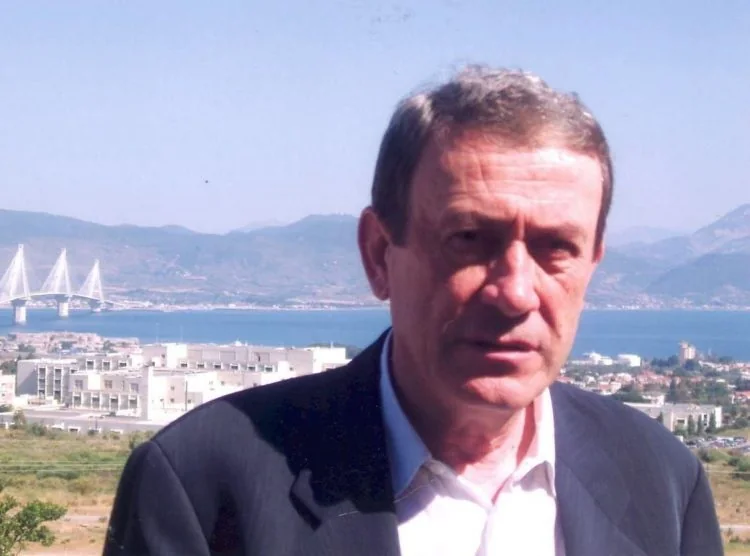
The Greek writer and statesman, Dimitrios Bakolas, has travelled extensively around the world and has gained a wealth of life experience.
Dimitris Bakolas is the President of the European Propylis Company.
The company is the lead firm for European technical assistance projects, funded by the World Bank and the European Union.
Dimitrios Bakolas is an associate professor of applied linguistics with ties to 50 countries. He began his career as an information science lecturer at Kyiv University. He then returned to Greece and continued his work in information systems. In the mid-1980s he worked at the European Committee for Standardisation (CEN CENELEC) in Brussels and, in Luxembourg, on the Anglo-Greek SYSTERN automatic translation system. From 1990 to 1995 he served as director of the Institute of Information Technology, which he had founded. The organisation was under the auspices of the Greek Centre for Labour and Industry. The institute, which came to occupy a leading position in Greece's information technology sector, became known as European Profiles from 1996. President of European Profiles, a member of the European Union's analytical body, and a member of the Greek Government's Communications Committee for Central Asia and Eastern Europe.
With extensive work experience in the Arab world and Mediterranean countries, and numerous publications in Greek, Russian, Ukrainian and English.
This book was included in the top 20 non-fiction titles of 2023 in Greece.
In his book, he has written about interesting incidents and observations from his life. “The Fortunate Man” is a biographical work, and readers will find it interesting to learn from the life the author has lived.
The first part of Dimitris Bakolas's book, ‘The Fortunate Man’, was published in Mongolia in 2023 and became popular among readers.
The second part of ‘The Fortunate Man’ was published in 2025. In 2025, Dimitris Bakolas received the Mongolian Writers' Union Prize.
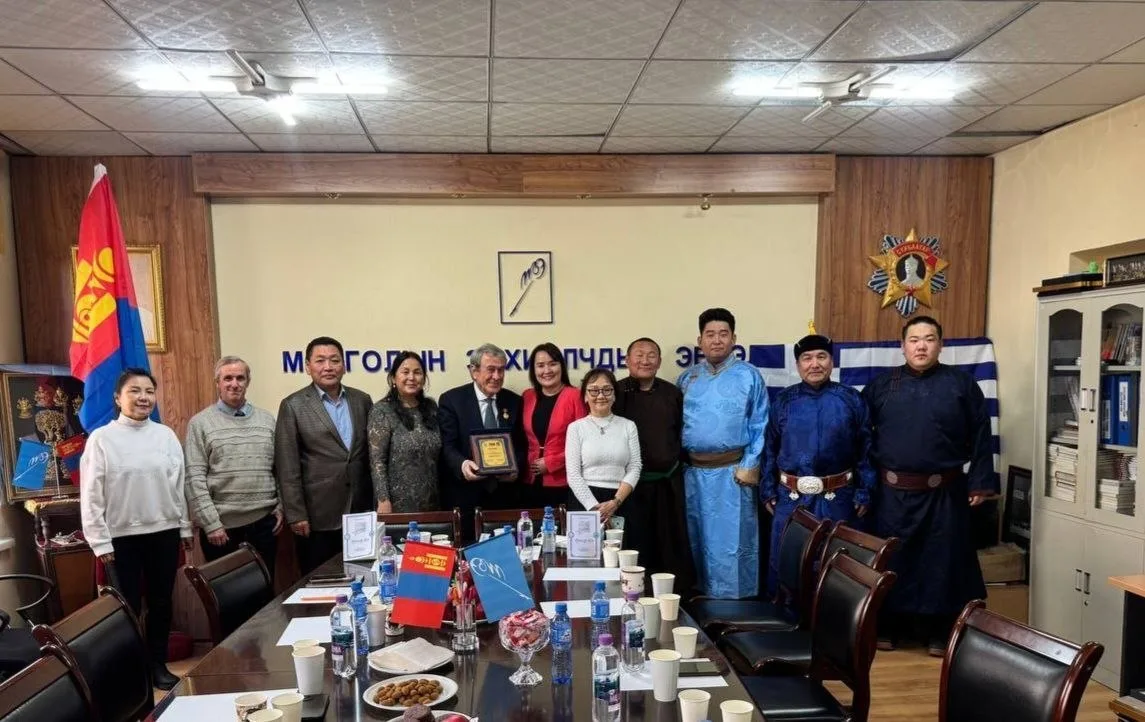
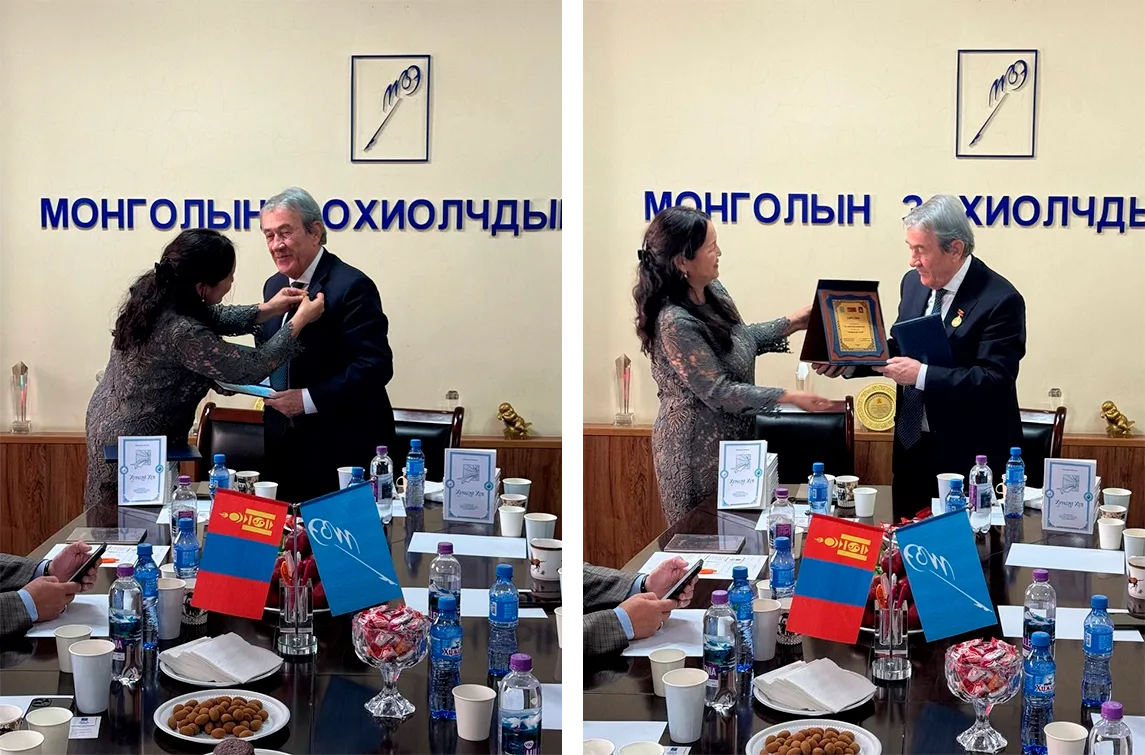
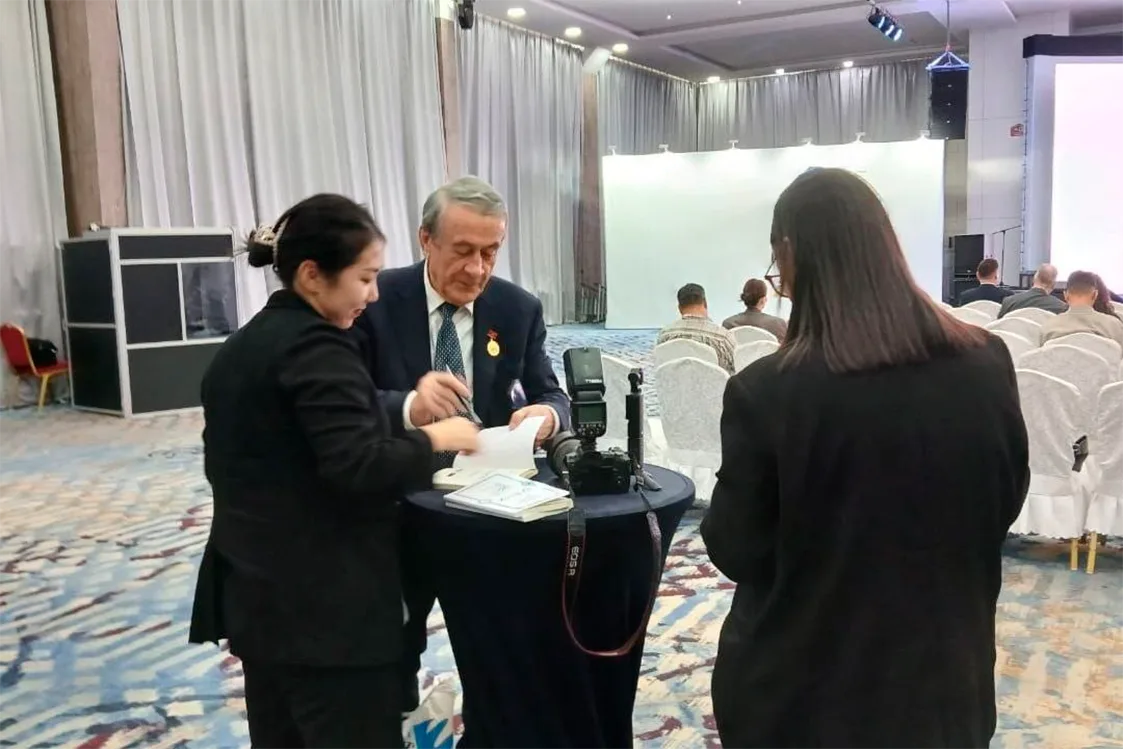
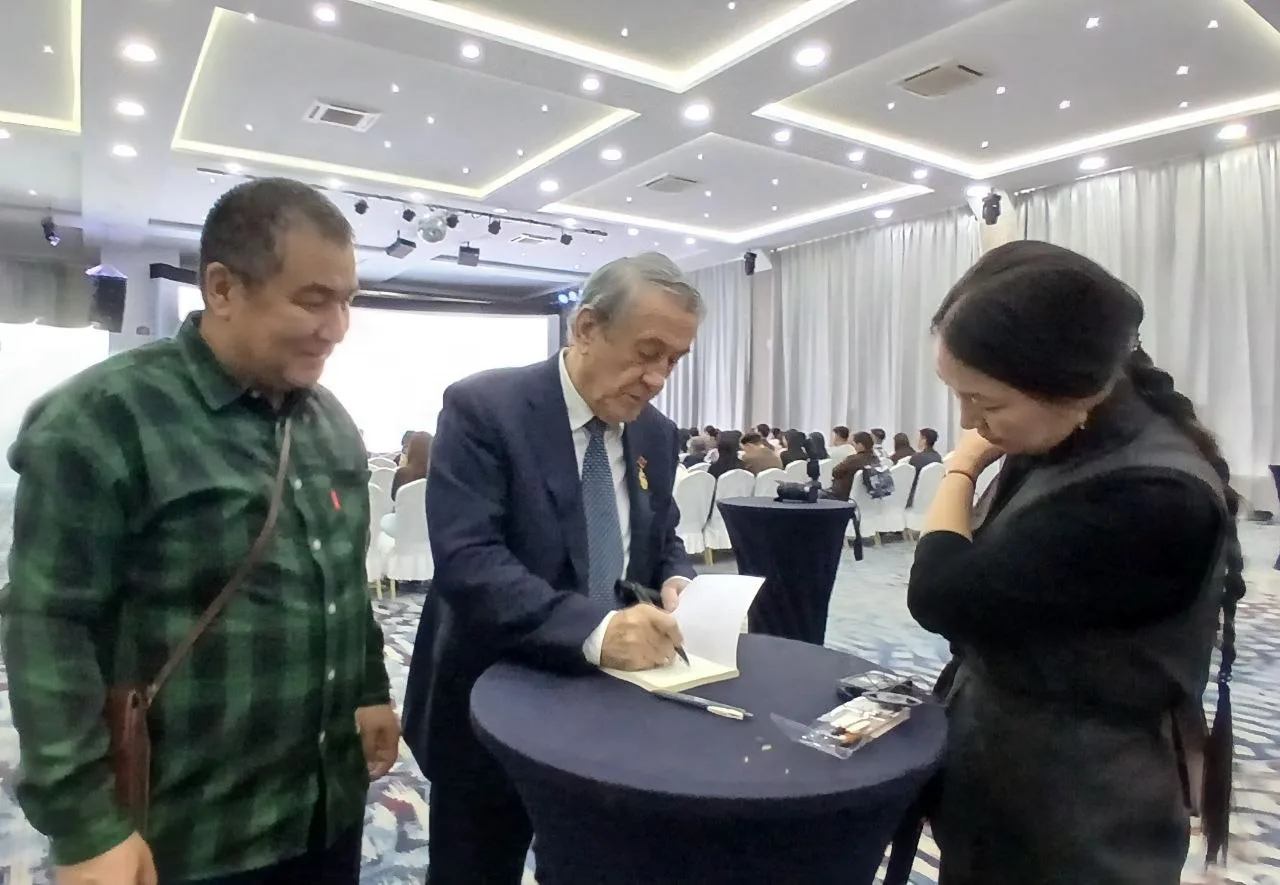
We are delighted to have begun publishing this wonderfully interesting book in our journal.

"The One with a Share"
After the Greek Civil War: Karditsa, Belokomiti
I was just over three years old at the time. My grandmother sliced a big loaf of bread. The bread she'd just brought from the bakery smelled warm and toasty. She sprinkled sugar on it. Then he soaks it in water to let the sugar dissolve. I love that. I grabbed my bread and ran out of the house. The rain had just stopped. Water was standing everywhere. But it wasn't cold. I was going to show my bread to my friend Yannis. He likes sweet bread too. I might let him taste a little. Yannis isn't outside. I went to look for it. At that moment I didn't notice something: it was a piece of plastic wrap. Maybe it was a pumpkin peel. As soon as I slipped on it, I dropped my bread straight into the water. And then my bread vanished as if it had never existed. When I got home, no matter how hard I tried to hold back, I couldn't stop my tears—my lips just kept trembling.
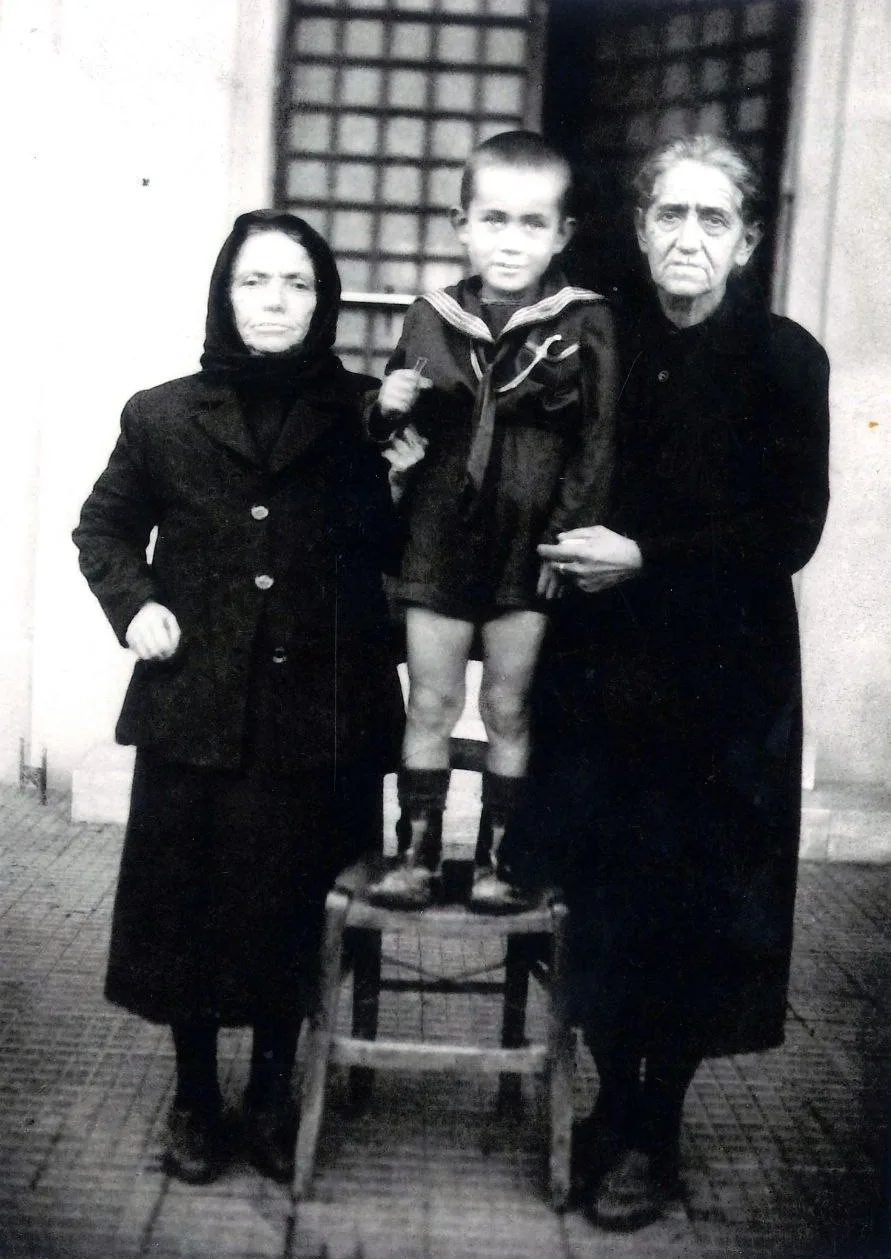
"What's wrong, my son?" his grandmother asked. He lost his patience and burst into tears as hard as he could.
“I dropped my bread in the mud.” His grandmother hugged him and, stroking his head, said, “We have bread at home, and plenty of sugar, too…”
This is my very first memoir. The loss of my most precious possession and my grandmother's love and care both coincided at that time. Back then, it was just my grandmother and me. My father had been killed, my mother was in exile, and all our other relatives had been sent to concentration camps and prisons. My world was my grandmother. She did her best to keep me from feeling orphaned in those harsh circumstances. I lived with my grandmother in Karditsa, in the Thessaly region of central Greece. Our house had a very large garden, and almost anything would grow there. From March on, I would start checking inside to see what had or hadn't come up. Besides cucumbers and tomatoes, I was very fond of green peas and beans. In addition to apples, cherries, and strawberries, white and black currants grew in abundance.
I grabbed my sugar-coated bread again and started looking for my friend Yannis. This time I held the bread tightly so it wouldn't fall and walked carefully. I found Yannis near his father's workplace. This was a bike rental shop. There were six bikes in total: two new and four old. But they weren't in bad shape. Yannis was watching his father repair a bike. I walked over to him. Yannis saw my bread but didn't say a word. He just swallowed hard. “Do you want to try it?” I asked. “Let me have a little,” he said. I gave him a piece of my bread. He took a bite and said, “Mmm, this is really tasty.” His father looked at the two of us and said, “What are you two doing? Go outside and play.” Outside, I gave Yannis another bite of my bread. Yannis is my best friend. His house is next door to ours, and we play together all day on Karditsa's main street, which opens onto Karayiskaki Street. Sometimes we play with the kids next door. But most of the time, it was just the two of us. Our favorite thing was bikes. When Yannis's father went out on business, he would tell the two of us to watch the shop. Then we'd leave our shop with Yannis's older brother, grab our two old bikes, and head home. We loved riding our bikes to our place because the road was so steep. At first, when we were little, we'd stand on the pedals and coast downhill. Then we'd push our bikes up the hill and ride back down again. When we got a little older, the two of us would put our right feet on the bike's frame and ride. It's really hard to explain that method today.
In a sense, pedaling is a slight incline: the left foot on the left pedal, the right foot inside the crank on the right pedal, and you combine finding your balance with pedaling. Riding like that was not only painful for us but also bad for the bike. Fortunately, even though Yannis's father kept grumbling that the bike was broken again, he was a very good man. He kept fixing our broken bikes again and again, yet he never forbade us from riding. In fact, he watched us ride in that odd way with delight. After that, the two of us almost ended up riding our bikes. My feet could barely reach the pedals, but if I sat on the seat they wouldn't reach. I still remember one of my first times riding my bike. Needless to say, I was overjoyed. On my way home, I was descending a steep hill and turned onto Karajskaki Street when a huge bus suddenly appeared in front of me. At the last moment I swerved sharply and ended up in a ditch at the side of the road. Luckily I didn't get run over by the bus.
Although I had a great time in Karditsa with my friend Yannis and my bike, I preferred living in the village of Belkomiti. Belkomiti was located on the high Agrafi mountains north of Karditsa. Now there is Lake Plastira there. Our family had a three-story house in the center of the village. It was bombed during the Civil War. Half of the house—the lower section—collapsed. Only the upper part with its balcony remained. My grandmother and I lived in that half-ruined house after the Civil War. One of the two rooms left after the bombing was on the first floor, and the other was a room with a balcony on the second floor. At that time, my grandmother decided to stay in her village to survive. At that time, my grandmother's husband's pension had been cut off. My grandmother's husband—my grandfather—had been an education inspector when he went off to the war with Turkey and was killed. In our village, they called my grandmother the inspector's wife.
In our village, there were private orchards and fields for personal use. We could also get eggs, cheese, butter, and the like. In addition, my grandmother bought a goat and fed me milk. I grew very close to that goat and loved her dearly. Maybe she loved me too. Wherever I went, she would follow me. We never tied her up. If I tried to tie her down when I went somewhere, she would get really upset and make a huge racket. The village children, especially the girls, loved playing with my goat. There were all sorts of strange things in the village. There were all sorts of interesting things: shooting birds with a slingshot, finding nests with chicks and eggs, being the first to pick berries, and so on. Unfortunately, my grandmother wouldn't let me go to the river alone to look for crayfish.
I used to be afraid to go anywhere without my mother's permission. But whenever my cousins went fishing at the Antanokya River, I would tag along. My mother's side of the family is the Antoniu clan. We used to dam the Megdova River with stones. Now the Plastira River has formed there. This river is shallow, only 20 to 30 centimeters deep. But in some spots it was shallow. We were afraid to go near it because they said it sucked you in. This river had all kinds of fish—trout and plenty of snakeheads. When we dammed the river, we left the upper section open. Fish swim into the dammed area and can't get back out. Then we go ashore and wait for a few hours. During that time, the fish gather. After that, the older brothers would wade into the river and lift rocks to look for trout. The experienced fishermen knew exactly which stones to turn over. At the spot we'd chosen, two or three of us would slip our hands under the rocks, and if someone's hand caught a fish, they'd pull it out and toss it onto the shore. The younger brothers would then grab the fish and put them into a bucket of water. Sometimes, instead of a fish, you'd pull out a snake. But if it was a water snake, it was dangerous. They don't bite underwater, but they're really unpleasant. We'd all tease and laugh at whoever pulled out a water snake.
I started my first business in the village. I found a rusty, spear-tipped gun on the mountain and brought it home. At that time, firearms were abundant on the mountain, and there were tragic incidents when grenades were found and exploded. My grandmother scolded me, “What have you brought? Go put it back.” When I told her I'd protect the house with this gun while she was away in the village of Karditsa, she agreed. While my grandmother was away, I would go out onto the porch and start my guard duty. The village children would gather below, jealous of me and wanting to stand guard too. Before long, I started charging the kids a protection fee. Depending on what they gave me, I'd decide how long I'd stand guard. I'd take candy, cookies, cornbread—basically anything. But the most valuable thing was money, even if it was only a little. With just a coin or two you could go into Fotis's store, where there were more things than you could dream of.
We came to the village twice and lived there on two occasions. The first time, we stayed in a half-ruined house with goats and a rifle; the second time, we went to use the scholarship money given to war victims to repair our house. My grandmother brought in workers from the city of Epirus to repair the house. But they did a very poor job. The lower wall of the house cracked. As a result, the inspectors refused to accept the house. However, my grandmother got us a brand-new, intact house that hadn't collapsed. This house, despite its poor inspection report, stood for thirty years. In 1951 we settled in Karditsa, and I was about to start school. At that time another family was living in our house. Among them were my mother's cousins, my grandfather's nephew's children—Ilia Antoniou—and his wife's sister, Lieni. We used to call them “Antoniaka” for short. There were five children in all.
Dinos, Antonios, Euripid, Pausanias, and Poppy. Euripid and Pausanias were four to five years older than me. They would sometimes play with me. The others were much older than me. In addition, my father's brother, Kostas Bakolas, and his family lived with us. Uncle Kostas had emigrated to Poland together with my mother's brother, Nicholas Antonio. Kostas's wife, Hariklia, moved into our house with her children—Tanasis, Chrisanthi, Babis, and Litsa. Babís was two to three years older than me, Litsa was two years younger, and Thanassis and Chrissanti were the older children. I used to play a lot with Litsa. The two of us would go out to the garden to catch butterflies and pick fruit. We were like one family with them. Hariklia would prepare food and drinks for my grandmother. Christiantia did the housework, and Thanasis and Babis worked outside the home. But Litsa and I would play all day. During the harsh famine, my sister Hariklia would arrange with the butcher to get the leftover bones from him. Those bones didn't even smell like meat. But when you boiled them, they added meat flavor to the stew, and from some of the bones you could find bits of marrow and bone remnants. By the time I started first grade, I had already learned to read. A small part of my grandfather's library remained in our house. I don't know what happened to the books in that library. The most likely explanation is that the partisans burned them to keep warm. I found many books on education. Teaching methods, lesson plans, teaching skills, and so on.
Methodology textbooks didn't interest me. However, books on pedagogy did, and I read them. I really enjoyed the works of educator A. S. Makarenko. He organized orphaned children into detachments, on the one hand encouraging them to identify their own needs and on the other having them engage in socially useful labor and compete against other similar detachments. All these competitions were carried out under strict discipline. I loved introducing my grandmother to the educational methods I had learned. “God bless,” my grandmother would say. I suppose she liked what I had to say. One time, my grandmother really surprised me. For a small mistake, she once said to me, “If Makarenko had been your disciplinarian, he would have given you a proper punishment.”
Among the books in my collection, I liked the Iliad and the Odyssey the most and read them constantly. Whenever I finished a book on education, I'd go back to those two. I'd alternate between the Iliad and the Odyssey. Among the Greeks, I was most proud of the brothers Ajax and Diomedes.
I also liked Patroclus. But for some reason I didn't like Achilles. My favorite Trojans were Hector and Priam. But my chief Greek pride is, without question, Odysseus. When we kids played the Trojan War, I always chose to be Odysseus. If I couldn't be him, I wouldn't play.
I wasn't much of a student in school. I didn't even have any books. I'd occasionally get into trouble at school. But I excelled in math and writing. I used to read my compositions at school. I had friends at school, but none were as good friends as Yannis. I was fine in Karditsa, but all my thoughts were always drawn back to my village. Every summer, from June through September, I would stay in my village. My best friend in the village was named Nikos. Nikos was Mrs. Spirena's son. His house is still an extension of our house.
Ms. Spirena was very close to my grandmother and my family. She was a close friend of my grandmother, my mother, my sister, and my daughter, Katerina.
She was a strong woman, like my grandmother. She was widowed early, raised seven children, and lived to be a hundred. In her final year she told me that on August 15th Saint Mary would come and take her away. Her words were literally fulfilled. She died exactly on August 15. Such a person is called a saint in our land. Nikos and I formed our own team from the village kids and began competing against the team of my peers, the Vasili, who lived on the other side of the village. We played soccer all the time. At first we used a ball made of cloth and towels. Then rubber and leather balls appeared. Soccer was our main game, but we also played other games like hide-and-seek. Although we were always competing against Vasili's team, there was never any quarrelling or fighting between us. Now that I think about it, the reason we were competing was because of the political views held by our families. Our team was made up of the Levatsky family. I spent every summer in my village until I left Greece. In recent years we've been going abroad, but I used to count the days until I could return to my village.
My grandmother's and my life changed dramatically when my mother's sister, Aretis, and her husband, Apostolis Strongilis, returned from the island of exile. Aretis settled into our house in Karditsa. Apostolis stayed with us for a while before going to Athens to look for work. There, he wanted Aretis to be able to practice her profession. Our mother and Aretis had been dismissed from their jobs because of their political views. As soon as Aretie arrived, she tried to get our lives in order; she was an extremely exhausting person. She strove to be watchful about everything and approached each task with excessive rigidity. She drew up a daily schedule. Everything had to be done on time. Lunch was at 1:00, and in the evening you absolutely had to sleep between 10:00 and 10:30, and so on. What I hated most was the issue concerning my schooling. Somehow she had tracked down all my books. Then she made me review every subject—Bible reading, grammar, occupational safety, and so on. Fortunately, Sister Aretis didn't stay with us long—only a few months. When Brother Apostolis summoned her to Athens, my grandmother and I returned to our normal daily lives.
Athens
My grandmother and I didn't have much freedom. Aretie, my older sister, had started working at her school and couldn't find anyone to help with the household chores. They decided to bring my grandmother in to do the housework. We two, in a hurry and panic, grabbed all our things and set off for Athens. They were rushing to enroll me in school. Sister Aretie took me straight to the principal.
She gave me a very reproachful look and said, “Go wait outside.” When she spoke to Sister Aret, she said, “This child has developmental delays; enroll him in a special school.”
"This kid is no good at math, you say? He's the best in the class at math. How can a principal say something like that without even looking at his grades? Sir, I'm a teacher too. But I've never encountered such a careless attitude. I'll file a complaint directly with the ministry." We had barely managed to calm Aretis down at the time. The principal was terrified. He apologized. And of course they enrolled me in the fourth grade at the middle school in Athens's Vironas district. Aretis told me all this many years later.
Moving to Athens initially left me feeling down. I lost my simple way of life, drifted away from my friends, and my accent was different from the Athenian one. But I adapted quickly. Within two months I was speaking with a pure native accent. I made new friends who lived near both my school and my home.
Vladimir was one of my school friends. His family were Russians who had fled the revolution in Russia in 1917. I was very surprised to hear him speaking Russian with my mother. Later, I told my grandmother and Aret about how strange and exotic Russian sounded. At the time, I never dreamed that Russian would become my second language. When living in Athens, the thing I was most proud of was books. I was given a small amount of money for food when I went to school. But I rarely used it to buy anything to eat. Even when I was starving, I tried to spend as little as possible. So I would save up money to buy the latest issues of the “Young Hero,” “Superman,” and “Mickey Mouse” series. Very quickly, I had amassed quite a collection of these publications. Before long, I met other kids who collected the same kinds of books. We would talk about the heroic deeds of our favorite heroes and swap our books. The only obstacle was my mother's sister, Aret. He didn't like me reading these books. He was only happy when I was always doing my homework. That's why I used to hide my books everywhere. Then he'd go looking for them. Hiding my books wasn't a problem. But it was hard to read my books. Sometimes I'd read when I went outside. I also loved playing with my friends. The most reliable spot was the bathroom. I spent many hours there reading. Then Aret would tell me, “You're not digesting your food.” The most convenient time to read was when my older siblings went out to visit or to see a show. At those times, I'd put off all my planned tasks and couldn't decide which book to start with. It was pure bliss. My older sister and I would sometimes go away for two or three days, which was a huge opportunity. During those times I would finish all the books I hadn't yet completed. In particular, I would read the Apostolic writings without interruption. Only my grandmother knew about this habit of mine. She would let me read to my heart's content. But whenever my older brother and sister were about to come, she'd hurry me up.
“That's enough, my son, put down your book and go outside and play. Don't forget to put your uncle's book back where it belongs,” she would say. One time I came up with a new way to read my book in secret. At that time I was sleeping in the same room as my grandmother. I would get into bed early and tell my grandmother, “Don't turn off the light; it won't bother me.” I'd make a small hole in the bedsheet, prop my leg up on my thigh, and read my book with pleasure. But this arrangement didn't last long. One evening my aunt Arety suddenly came into our room.
“Why is this kid in bed so early? Aren't you sick?” she said, pulling back my blanket and tossing it aside. I was more upset about having my book taken away than about being scolded by my aunt. My aunt Aret was a teacher. She approached everything with a teacher's demeanor. I loved her and was proud of her.
My aunt seemed beautiful to me. I was never afraid of her. Even though she always scolded and reprimanded me, I wasn't scared. For some reason my clothes were always torn, and I used to go around with my knees scraped raw.
"Why are you so dirty, Dimitraki?"
That was a stain. You must not have noticed it when you washed it. My aunt Aret was so flustered that she couldn't say a word when I mentioned the price like that. When I went to my grandmother and told her about it:
“What are you doing, my girl? This is a child, after all; he'll run around and get his clothes dirty.”
I realized that my grandmother always took my side.
In Athens, I discovered another new source of interesting books. It was my cousin, Apostolis.
My maternal uncle, Apostolis Strongylis, was a journalist. He worked at the left-leaning newspaper Avgi. He was a member of the anti-German liberation movement, a member of the ELAS liberation army, and was in charge of the partisan airfield. That airfield was located near what is now Plastira Lake. He wrote not one but several books on occupation and the struggle for liberation, such as “The Partisans' Airfield,” “Free Capital of Greece,” and “Three Leaders of the Resistance Movement.” He also wrote quite a few novels. The main character in his novel “Adrian” was modeled on my aunt Aretis's biography. When they were in school, my aunt fell in love with Aretis. Aretis and Apostolis both took part in the anti-German movement and believed in the communist ideology of building a paradise on earth. They were arrested, tortured, and exiled to a concentration camp on an island, yet they endured it all and returned to an ordinary life.
She was a journalist, a writer, an aunt, and a teacher. The two of them loved each other. They were in love for their entire lives. First, Apostolis passed away.
I respected and feared my uncle. He never scolded or laid a hand on me.
Only once did something like this happen when my grandmother and I came to Athens from Karditsa. Apostolis was the one who picked us up then. It was there that I saw a tram crossing the street for the first time.
I had never seen one before, because there were no trams in Karditsa. I ran across the street after the tram. Apostolis ran after me too. He caught up and pulled me back by the ear, dragging me away.
"You can't just cross the road wherever you like here." I was told that you must cross only at the pedestrian crossing when there are no cars.
But then Grandma from the side:
“Apostoli, this is an orphan. I won't let anyone lay a hand on this child. I told his mother she could do whatever she wanted only after she'd been reunited with him.”
It happened exactly as he said. Brother Apostolis never laid a hand on me again. He loved and respected my mother. I think that in the end he grew attached to me and even became a good friend. I'll never forget that he took me to see a soccer match at the Panathenaic Stadium. We were both fans of the Panathenaic Stadium.
Apostolis also loved reading books. He was always bringing new ones. Unfortunately, Aretie understood these books as adult books and said I couldn't read them.
I secretly found and read all the new books. From Apostolisi's bookshelf, I read Nikos Kazantzakis's “Christ Is Being Crucified Again” and “The Last Temptation.” About a year later, a major change came into our life in Athens. I became the godfather of my cousin's daughter. After much debate, we named her Ivi Katerina. “Ivi” means “dawn.” Over time, her name was shortened to Ivi. We affectionately called her Ivaki. She was a very funny child. Small and dark-skinned. When she saw me, she would stretch out her arms and laugh loudly. It was so adorable to play with her, but at first she wouldn't let me get too close.
I was in love with my cousin, but I was also jealous of her. The reason I felt awkward was that I used to be the only child in the family, but now that my cousin Ivy is Aretie's biological daughter, it seemed like she was treating me differently than before.
My grandmother immediately understood my situation and began treating me more carefully and patiently. She almost stopped scolding me. Aretie began doting on her even more. I often heard her say, “Don't pay too much attention to your daughter; you'll end up hurting the orphaned child.” Shortly after the little girl came to our family, another girl was added. Her name was Aretula. After Aretula's brief leave, she went back to work, and my grandmother's household chores, on top of caring for the children, became burdensome. They brought a girl from our village who was three or four years older than me. Her family had agreed to help my grandmother with household chores and childcare in exchange for a certain amount of money.
Aretula had never been to any small town, let alone Athens. She didn't even know how the mistresses of Athens ran their households, let alone where anything in a house was. The refrigerator, electric stove, heater, parquet flooring, food market, and milk delivery—all of these were new to her. But she adapted very quickly, even managing to drop her Agrafiot village and Karditsa accents. Although I wasn't particularly fond of Aretula's appearance, I loved teasing and wrestling with her. Looking back now, I realize Aretula was partial to me, but I didn't understand it at the time because I was just a kid.
My cousin Iwaki became more interesting to play with as he got older, but I still hadn't let go of my clingy nature. Sometimes when I got angry I felt like slapping him, but I held back. I thought it was pointless to take out my anger on an innocent little child. Even though he was someone else's child, to me he was my only little brother.
Because she grew up pampered by everyone's attention, Ivy became a spoiled child. I didn't like that she tried to get her way in everything.
When he turned six or seven, I came up with a new way to punish him whenever he upset me.
My grandmother and my older sister Aret were worried that I was getting up and walking around at night in my sleep. I would get up at night, wander through the rooms, and then go back to sleep. I would even sometimes go outside, walk around the house, and then come back and go back to sleep. I didn't know any of this myself. When I consulted a doctor, they said I was fine, that it wasn't anything to worry about, and that I'd grow out of it. But he told me to be very careful—that you can't startle or interfere with them at that time. To keep me safe, he used to leave a bucket of water by my bedside.
It was at that very moment that I came up with a way to punish my cousin. I'd go to bed early, then sneak out of bed, half-open my eyes, creep up to Ivy, and give her one or two slaps. Aretie, my older sister, would watch my grandmother and me and say, “Don't you dare make a sound; you're not supposed to wake her at a time like this.” In the summer, whenever we went out of the village, Ikaki was always eager to get involved in everything I did. But that was impossible, because he was too little to play soccer or to go into the woods and find bird nests. However, he could join the house-house game that the village girls played.
I would be the father, the other girls would be my wife, and some would be my mother. For the role of my wife, I would choose the prettiest one. I would be the child of the Iwaki family. We would imitate all the household chores: cooking, cleaning the house, and so on. But one of our favorite parts of the game was the sleeping part. Basically, that's why we loved playing this game. “Dad” and “Mom” would lie down together, cuddle, and kiss. Since we were little, of course we didn't go any further than that. It was enough for us. But Ivy didn't always want to be a child. She also wanted to be a mother. Of course I wouldn't allow it.
Every summer, my mother's two cousins would come to our village. They were both very good musicians. Dinos played the guitar. Evrinidis played the mandolin. Antios played the violin and Pavsanias played the bouzouki, and they also sang beautifully. Together they formed a full orchestra. Every evening they would sing, play, and make music. They also used to take trips around the nearby area. Our favorite place to visit was the Vrisula Spring. Vrisula Spring was located in a very beautiful spot. Its clear, cold water flowed down from the mountain peak. It was so cold it would make your teeth chatter. The mountain opposite the village was very beautiful. It was high up, and the local herders (Vlachs) summered there. In summer they would go up Mount Agraphi to graze their livestock, and in winter they would come down and spend the season in the Livadi valley. Most of the Vlachs were relatives—uncles and cousins—of my grandmother and mother. Our mother, my sister Aretí, my brother Nikos, and later Antonis Dinos taught their children to read and write. That's why the Vlachs treated us with warmth and hospitality. The goat's milk, yogurt, cheese, ayrag, clafuti (a tangy dairy product), and so on that they gave us are unforgettable. Even after returning to Greece, my relationship with the Vlachs continued. One early morning, the doorbell rang. A man with a bag stood there:
"Does Dimitriakas Bakalos live here?"
“My name is Georgas Zigogianis. Dimitriakis's mother is my godmother. And I came to continue our kinship,” he said. He became the godfather of his godson and named him Georgos.
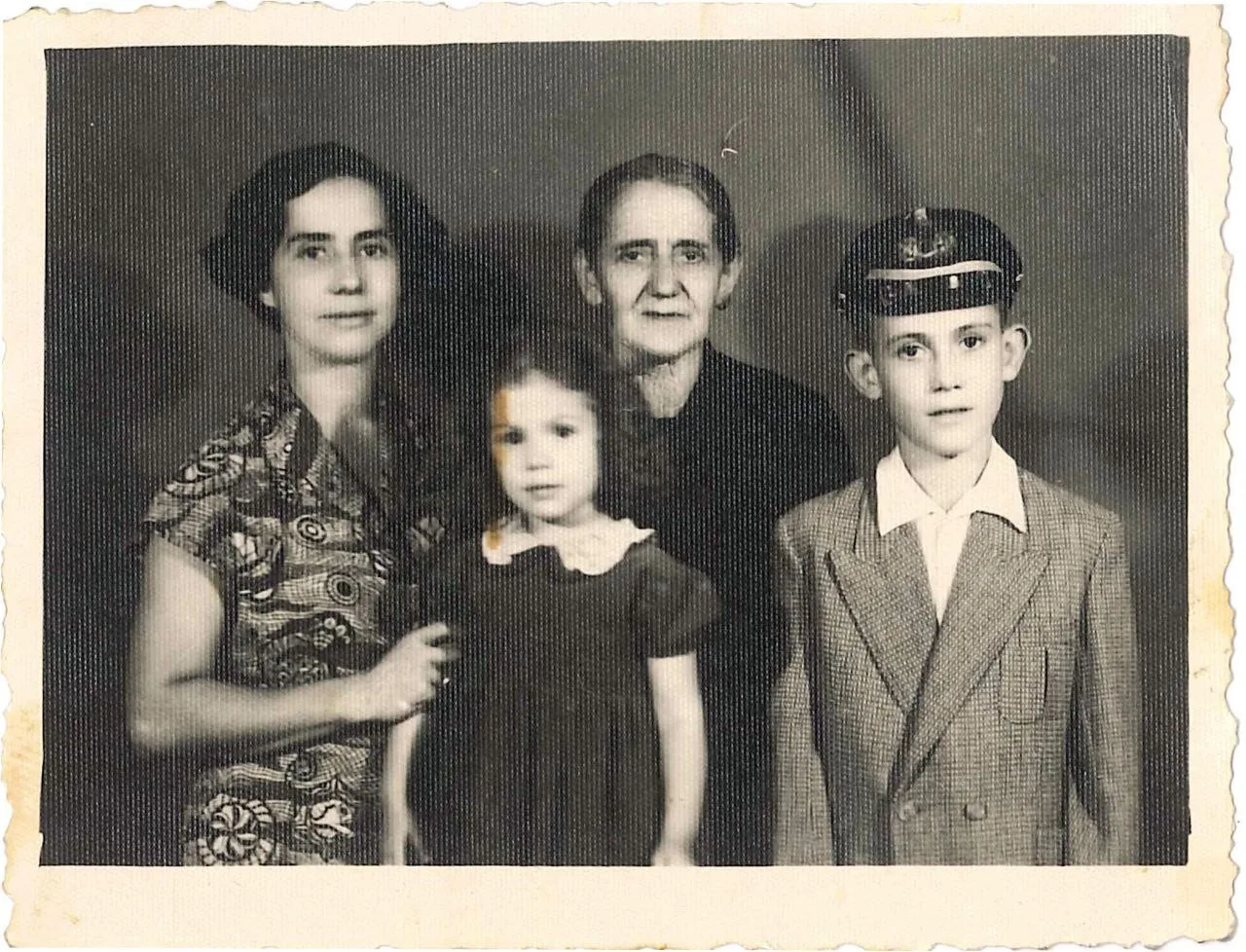
We became one family: Kostas, his wife Konstantina, and their children Georgios, Antimos, and Aristoteles. Grandma and I were moving to Athens at that very moment, and my two cousins, the Bakolakias, also arrived. They had been living in our house in Karditsa. They settled in the Nea Ionia district with my father's mother, my grandmother, Magdalena. We used to call her Grandma Bakolanya. My father's younger brother, Anestis Bakolas, also lived with them. As I understand it, there was an arrangement to occasionally take me to stay with this grandmother. I didn't live with that grandmother, so I didn't have the same close relationship with her as I did with my own grandmother. But she loved me because I reminded her of my father. Over time, I came to love and pity her. My grandmother had endured a great deal of suffering. During the Civil War she lost her son—my father. Her family was repeatedly subjected to displacement. I had a copy of the certificate given to my grandmother by the Greek police. That certificate was useful for getting a job and enrolling in school.
I never stayed at my grandma's for more than two nights. Actually, I didn't mind being there. I'd hang out with Litsa. But Babis would take me along and show me free movies. He worked as a projectionist at the Nea Ionia movie theater, and he'd let me into his projection room to watch movies for free. I used to go to my aunt's place reluctantly. The main reason was my cousin Anestis.
My older brother Anestis imposed his own regime there, demanding obedience and the unquestioning execution of his orders and ideas. He forbade my cousins from reading magazines or listening to the radio. He was especially strict with the girls, scolding them for roaming around too much. He would come home at noon. We were allowed to eat whatever food we liked, but afterward we had to be completely silent.
One time I was sitting with my grandmother having coffee when the door suddenly opened and Anestis walked in. I dropped the cup of coffee I was drinking. But by magic he caught it in one hand without spilling a drop. Anestis was so afraid of his older brother that he would sometimes turn into a magician. As for school in Athens, not much had changed. I read a lot of books as before and paid little attention in class. My sisters used to help me with math and literature. Aretis, while doing her work, paid attention to her child and supervised me far less. Occasionally she'd say, “I'm going to test you today,” but since she was so busy, it never happened. Whenever she did check on me, I'd pull out my math and try to explain it to her, but she wouldn't really understand and would just let it go.
After the first quarter of middle school's upper grades and the gymnasium, I would go with my sister Aret to hear my grades. My stomach would churn as I neared the school, because I already knew what my grades were. In some subjects I had failing grades. Wondering how things would go, I hid behind a tree. Whenever my sister came running out of the school like an arrow, I couldn't help but run away.
“Dimitrachi, Dimitrachi, my son, stop.” Not knowing what was happening, I froze, and he scooped me up, kissed me, and said:
“You're doing fine, kiddo; you just need to pay a little more attention in your other classes. The teachers are generally pleased with you. They said you have a bright future. I don't know exactly what they said, and I don't want to know.” Now at least Aretie will leave me alone and stop checking on me all the time. After that incident, she really did stop nagging me and, instead, started paying attention to me. My sister never told me the exact details of what she said back then. But many years later she told me what happened. When she saw my grade, Aretis's face turned pale, she felt unwell, and asked for water. At that time in Greece, high schools used a 20-point system. But mine was 11.5. As the principal was giving my sister water, he said:
"What are you worried about? He has an 18 on the math test. That's the highest score at our school. With math skills like that, there's no need to worry about him. He can fend for himself anywhere. He even said he could pull himself out of a lion's den."
Our life in Athens was becoming normal. Apostolis and Areti were both working, I was attending my gymnasium, and I could read my book freely without hiding it. I began preparing to enroll at the Ivaaki School. My grandmother continued to take care of the household chores and look after us.
I started taking French lessons. I still remember well the song “Un petit oiseau apprise voler.” We moved three times in Athens—within the same district: Kesarinis, Analipsi, and Vironas. We've been living in the last one for three years. It's the best of them all.
I now consider myself a native Athenian. The people in my village also see me as Athenian. I've made many Athenian friends, both at school and near my home. At school there's Vladimir. He's of Russian descent. Also Bakacelos. I've forgotten his name now. Near my home, I used to be friends with all the kids in the neighborhood. One strange thing was that I got along easily with girls. My sister Aretie was always amazed by one thing: the girls next door would invite only me, besides the other girls, to their birthday parties.
My grandmother's health suddenly began to deteriorate. Before she passed away, she wanted to meet my older brother Nikos, who lives in Poland. She also wanted me to go to Uzbekistan to see my mother. My uncle Apostolis always aimed to fulfill my grandmother's wishes. After much effort, the two of us decided to go first to Poland to see my brother Nikos. After that, we planned to go to my mother in Uzbekistan in the USSR. It was a very difficult undertaking at the time, because the USSR was a communist regime. However, my brother was a journalist and had connections with the government. I don't really remember exactly how I felt when they sent me to my mother. On one hand, I was leaving my friends behind and heading to an unknown place. On the other hand, I was going to the great USSR. For this country, my communist father had become a leader of the movement against the Germans, and my mother's sister, Photini, gave her life.
Almost all members of our family have endured hard times.
We were happy to be going to our proud country, the first nation to send a man into space, and the country building a happy society in the world.
To be continued…